

NEW: STAR Trial Results 2026
The STAR trial has found that Trauma-Focused therapy integrated with Cognitive Behaviour Therapy for psychosis (TF-CBTp) can help people with psychosis and PTSD
Results of the STAR trial have now been published in The Lancet Psychiatry with comment
What did the STAR study look at?
Many people who have distressing symptoms of psychosis (such as distressing beliefs or feeling paranoid, and hearing, seeing or feeling things that others can’t) have also experienced traumatic events. As a result, they can develop post-traumatic stress disorder (PTSD), which can cause further distressing symptoms such as flashbacks, nightmares, feeling on edge, avoiding reminders of trauma, and negative thoughts about themselves or the world.
Although there are effective trauma-focused therapies, they are typically not offered due to concerns that they might make psychosis symptoms worse .
However, new findings from the STAR (Study of Trauma And Recovery) trial, published in The Lancet Psychiatry, show that a trauma-focused therapy specially adapted for people with psychosis, and lasting around 9 months, is both safe and effective.
305 participants who were experiencing symptoms of both post-traumatic stress disorder and psychosis participated.
154 had TF-CBTp therapy and usual care
151 had usual care
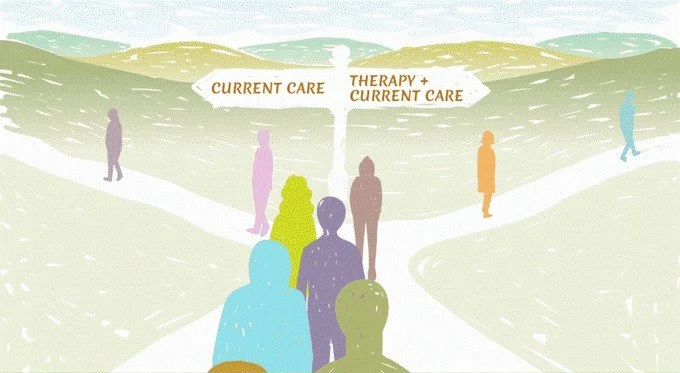
What did the STAR study find?
Key Results
ACCEPTABLE
93.5% engaged in therapy, with 85% completing therapy
REDUCES PTSD
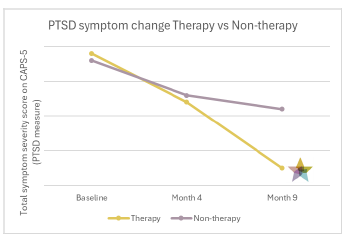
50% in remission from PTSD after therapy, compared to 20% who had usual care
HELPS OTHER PROBLEMS TOO
Therapy also helped distressing beliefs and paranoia, some hallucinations, depression, anxiety, suicidal thoughts, and overall psychological recovery
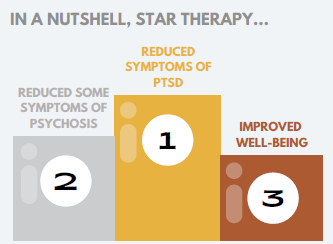
The therapy successfully reduced symptoms of PTSD, psychosis and emotional difficulties at the end of therapy.
Around half of those who received the therapy no longer met the criteria for PTSD after TF-CBTp. In comparison, just over 20% of people receiving usual care no longer met PTSD criteria.
Similar improvements were seen for people experiencing complex PTSD (which affects emotional well-being, self-perception and relationships, often resulting from prolonged or repeated trauma).
The large majority engaged with the therapy (93.5%), with 85% completing therapy, confirming that the therapy was highly acceptable.
Overall participants showed significant improvements in a wide range of areas (22 out of 27 outcomes), with effect sizes ranging from large to small, including:
PTSD symptoms (flashbacks, nightmares, intrusive thoughts/memories and feeling on edge)
Negative impact of distressing beliefs, paranoia, seeing and feeling things that others can’t (but not voices, which got better in both groups)
Depression and anxiety
Suicidal thoughts
Overall psychological recovery and wellbeing
Interestingly, those who did not receive the STAR therapy also showed some improvements. For example, at 9m follow-up, both groups reported less distress related to voice hearing. This improvement might be due to the services they were seen by, things getting better over time, or even from the trauma-informed assessments completed with STAR.
Why is this important?
People with psychosis are much more likely to experience PTSD than the general population, yet they have often been excluded from trauma-focused therapy and research studies. This has meant many people have been unable to access therapies that could help them process traumatic experiences.
The STAR trial provides important evidence that this trauma-focused therapy can be delivered safely and effectively, and that it should be made more widely available.

“In conclusion, the STAR trial represents a landmark contribution to the field. The trial establishes a robust empirical foundation while pointing towards a future characterised by integrated, transdiagnostic, and process-based psychological interventions for individuals with PTSD and psychosis.”
This research was possible thanks to funding by the National Institute for Health and Care Research (Health Technology Assessment).
The trial was run by the King’s Clinical Trials Unit. More than 120 staff in five sites across England (London; Manchester; Newcastle; Oxford and Sussex) were involved in delivering the trial, which took five years to complete.